Rolled Oats Specification: 7 Essential Checks for Bulk Buyers
Maibahe Buyer Guides · Updated 4 October 2026
A rolled oats specification should identify the oat format, ingredients and allergen information, pack configuration, agreed quality criteria, shelf life, storage conditions and revision date. Match it to a named SKU and the sample you approve. A catalogue weight or a generic description of oats cannot replace a current product specification.
This guide helps wholesale and private-label buyers review the information needed for an oat order. Maibahe’s rolled oats product page references the Chinese catalogue dated May 2026. Its listed formats are historical retail presentations; current recipe, export pack, availability, MOQ and documents must be confirmed before buying.
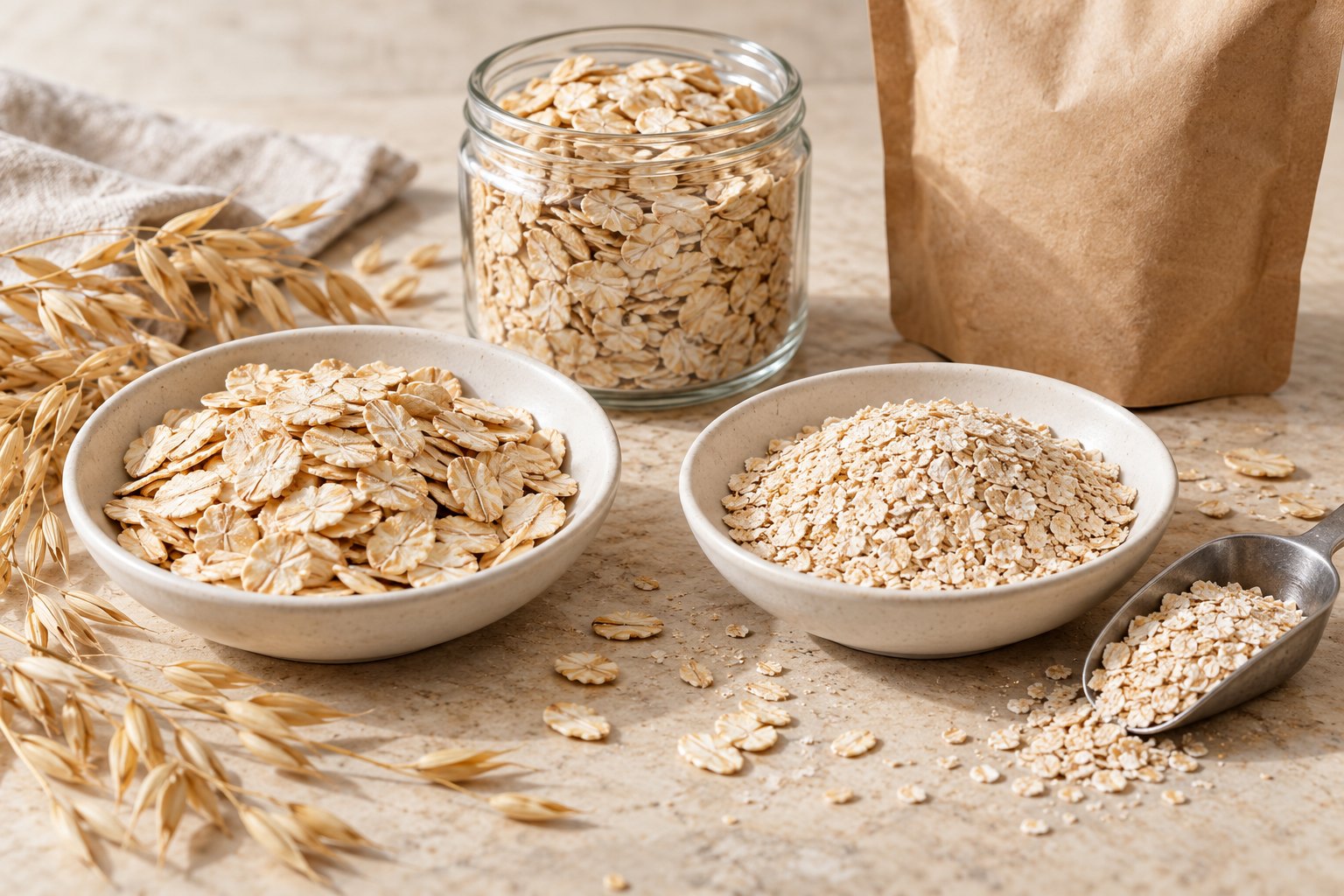
Rolled oats specification: what should buyers request?
Request a document that distinguishes product identity from commercial terms. Product identity includes the recipe, physical format, pack and agreed acceptance criteria. Commercial terms include quantity, price, sample charges, production schedule and delivery responsibilities. Link the two by SKU and revision so the supplier and buyer review the same proposal.
A useful rolled oats specification makes unknowns visible. If flake thickness, moisture limits or a test method matter to your application, ask for the supplier’s proposed values and supporting information. This article does not provide laboratory results or universal limits for a Maibahe batch. Agree appropriate criteria for the product you actually intend to order.
Which oat formats appear in the historical catalogue?
| Catalogue description | Listed net weight | Source |
|---|---|---|
| Instant oat flakes | 750 g | May 2026 catalogue, p. 3 |
| Large oat flakes | 900 g | May 2026 catalogue, p. 3 |
| Whole-grain oat flakes | 838 g | May 2026 catalogue, p. 4 |
| Yam and purple sweet potato oat blend | 500 g | May 2026 catalogue, p. 3 |
| Coconut and chia oat blend | 500 g | May 2026 catalogue, p. 3 |
| Mixed-grain oat blend | 450 g | May 2026 catalogue, p. 4 |
These entries are reproduced from the published product page and its historical catalogue reference. They help identify a starting point for discussion. They do not establish today’s export offer, manufacturing minimum or available bulk bag. Ask the team to match the description to a current SKU before comparing specifications or preparing packaging artwork.
Plain oat flakes and an oat blend need different ingredient discussions. For a blend, request every ingredient and its role in the recipe, along with any percentages needed for your specification review. Do not infer a blend’s nutritional profile, allergen status or suitability from the flavour name. The rolled oats specification should describe the proposed recipe in writing.
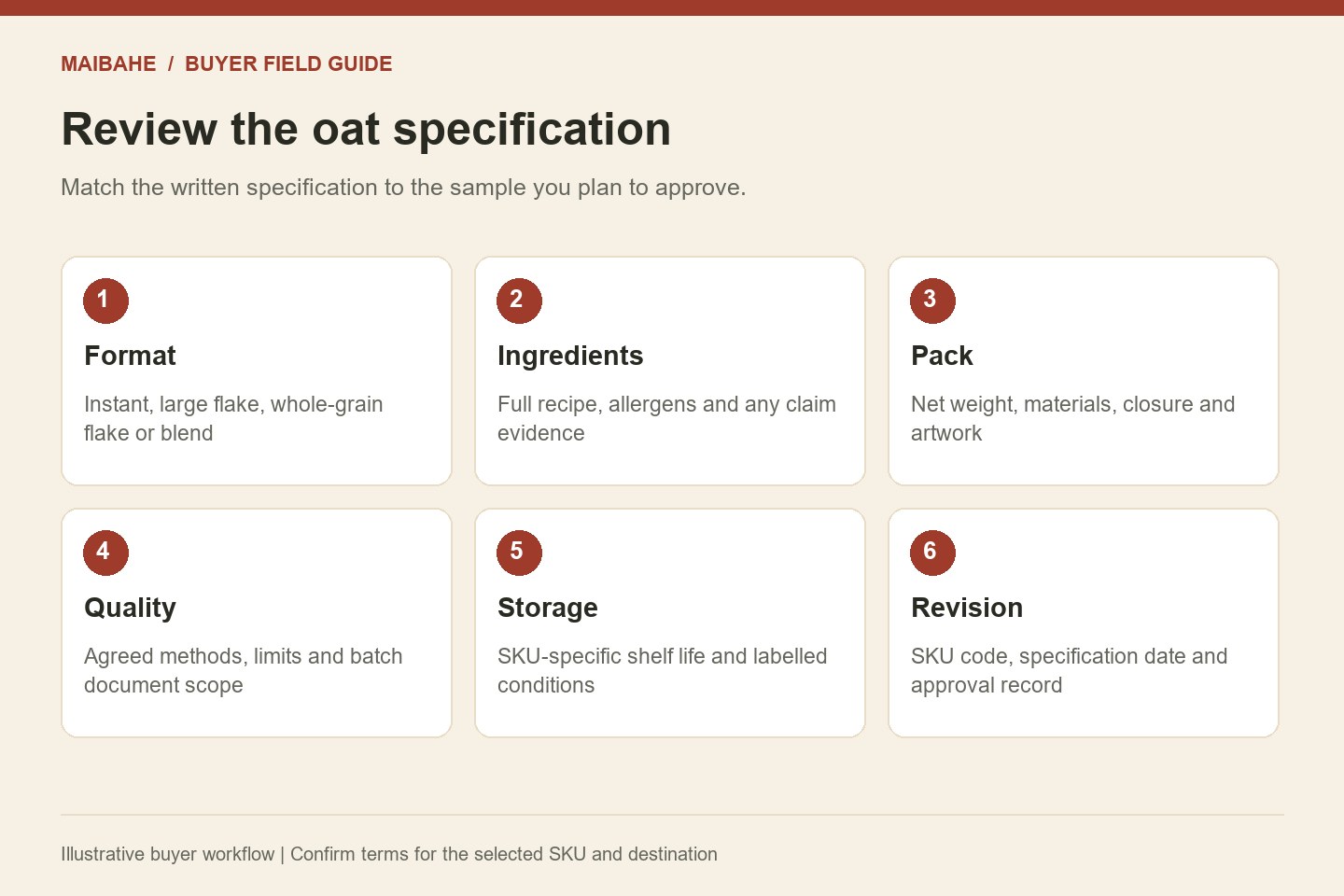
Seven essential checks in a rolled oats specification
1. Product identity and format
Record the SKU code, exact product name, plain or blended recipe, and whether the format is instant, larger flake or another supplied presentation. Ask what distinguishes the formats in the supplier’s current range. A photo can help identify appearance, but it does not establish the agreed dimensions, preparation characteristics or recipe. If flake size matters, define the measurement and review process.
2. Ingredients, allergens and claims
Request the full ingredient and allergen information for the proposed product, including relevant cross-contact information. Do not infer a gluten-free claim from the word oats. If a claim is required, ask for the applicable supporting evidence and the label wording proposed for your destination. A certification statement on a different product line does not establish the status of the oats you are buying.
3. Physical and sensory review criteria
Define which characteristics matter for your application: appearance, odour, broken flakes, texture or performance under a stated preparation method. Ask the supplier to propose measurable criteria where needed. Record the method and acceptance basis, not just adjectives such as premium or fine. A rolled oats specification becomes easier to use when the sample review can be repeated by another person.
4. Quality information and document scope
List the tests and supporting records requested for the selected SKU. Check the sample or batch identity, issue date, test method, result units and applicable limits in any report supplied. Do not treat the existence of a report as confirmation that every buyer requirement is covered. Use the quality document request page to ask what can be provided for the proposed order.
5. Packaging and label configuration
State net weight, pack material or required performance, closure, outer carton, units per carton and the label language to review. Confirm whether you are discussing an existing pack or a private-label project. Agree who supplies artwork and who approves it. The OEM and private-label page is relevant when your brand or recipe introduces additional work. Ask whether a pack change alters MOQ or schedule.
6. Shelf life and storage conditions
Request the shelf life and storage conditions for the exact SKU, together with the date-coding format and the point from which shelf life is measured. Ask about remaining shelf life at dispatch or receipt if it is important to your channel. Do not borrow a storage period from another grain or infer performance from packaging appearance. Include transport and receiving needs in the sourcing brief.
7. Revision and approval record
Date the rolled oats specification and identify the buyer and supplier contacts responsible for approval. Keep sample references, artwork and agreed exceptions with that revision. Ask how ingredient, source, pack or process changes will be communicated before supply. An email chain is easier to audit when it identifies the specific document version rather than referring to the latest file without a date.
A practical oat sample approval workflow
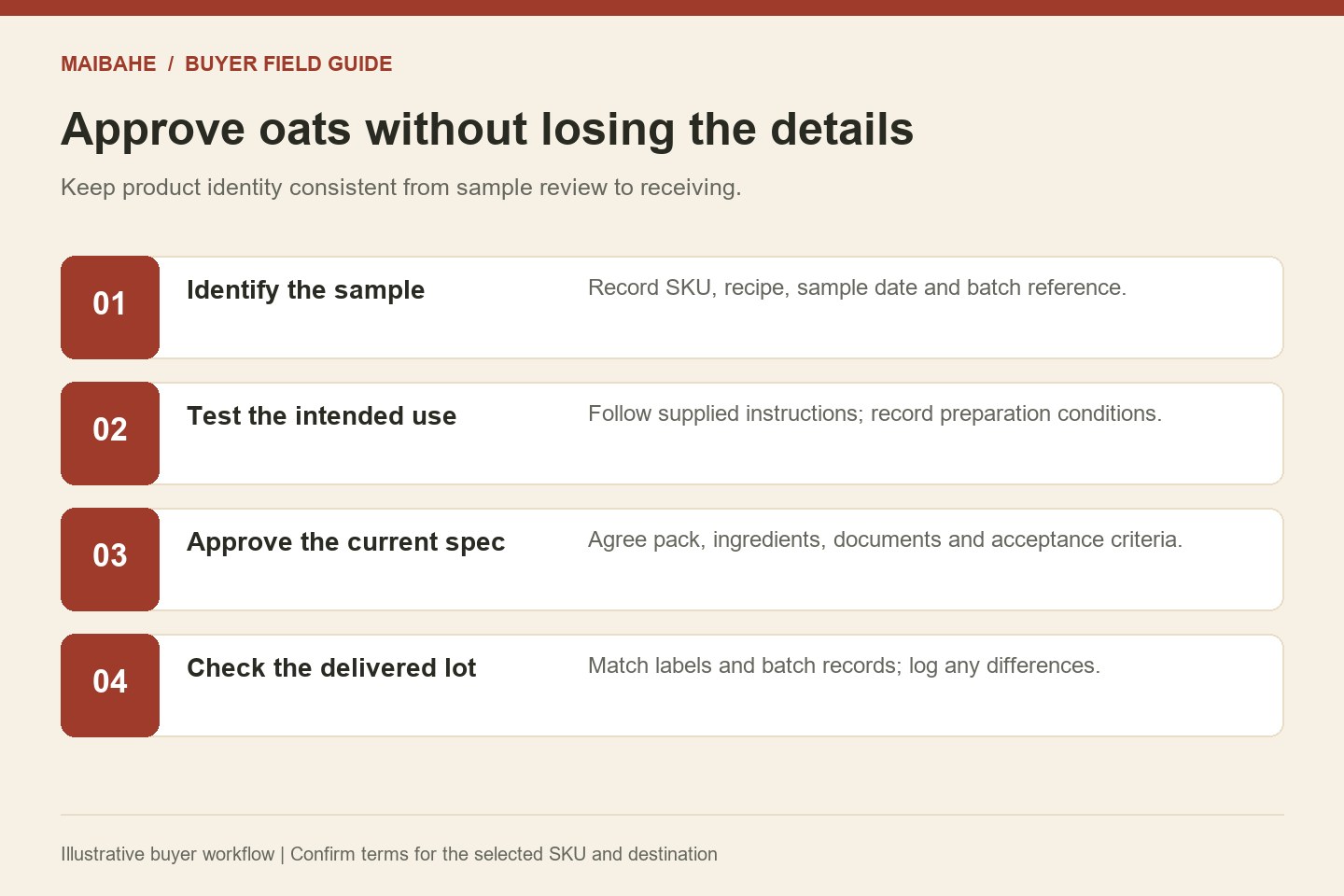
Use the rolled oats specification with a sample that has a clear identity: product name, SKU or reference, recipe, sample date and any available batch identifier. Choose the intended use and ask for supplied preparation instructions. If you compare two formats, hold your own test conditions constant wherever practical and write down any differences. Label these as your review observations, not independent certification results.
For example, a buyer could compare two oat samples using the same measured quantity, equipment and supplied preparation method, then record appearance and texture at the same observation point. These are illustrative evaluation steps; they are not a tested Maibahe recipe or a promised cooking time. If one format meets your channel’s needs, confirm that the approved rolled oats specification describes that format.
Before approving a run, use the rolled oats specification to resolve any differences between the sample, specification and artwork. If the sample contains a blend but the quotation names plain flakes, ask for a corrected proposal. If your proposed pack differs from the catalogue presentation, request confirmation of the actual pack and order conditions. Use the grain RFQ checklist to keep the commercial questions together.
Receiving checks and change control for wholesale oats
Prepare a receiving record against the rolled oats specification before dispatch. It can include the order reference, SKU, specification revision, delivered pack count, net weight markings, batch codes, date codes and visible pack condition. Record discrepancies and follow the agreed hold or review process. Confirm in advance who receives the documents and who may accept a change. A receiving checklist should reflect your approved specification rather than inventing new criteria after delivery.
Retain the approval record for repeat purchases. A repeat order still needs a current quotation and confirmation that the specification remains applicable. If the recipe, pack or source changes, ask whether a new sample or document review is needed. The grain supplier checklist helps evaluate how consistently a supplier handles these questions.
A copy-ready rolled oats specification review record
A review record for the rolled oats specification helps a buyer move from a product description to a dated approval. It should identify the order being discussed and the information still needed. Use the following prompts with the supplier’s actual documents. They are a review template, not measured Maibahe values, and they do not establish a particular oat format, laboratory limit or pack as currently available.
Identity and recipe record
Record: “Supplier product name: [name]. SKU or reference: [code]. Proposed oat format: [format]. Plain product or blend: [description]. Ingredient list document: [file and date]. Specification revision: [revision]. Intended sales channel and destination: [details].” If the same familiar product name appears on several files, ask how the codes distinguish them. The rolled oats specification should allow another reviewer to identify which product the sample and quotation describe.
Packaging and label record
Record: “Proposed net weight: [weight]. Pack format: [description]. Closure: [description]. Units per carton: [count]. Label language: [language]. Artwork reference: [version]. Packaging or label questions still open: [list].” A retail weight from the historical catalogue can be included as a reference, but label it as historical. Ask the supplier to state the pack actually proposed for the order. Keep any buyer preference separate from the supplier’s confirmed proposal.
Product information and evidence record
Record: “Ingredient and allergen information reviewed: [document and date]. Shelf-life and storage information: [document and conditions]. Requested tests or supporting claims: [requirements]. Evidence received: [files]. Product, entity, date and batch scope checked: [notes]. Items awaiting clarification: [list].” Use the rolled oats specification to define which evidence your team needs. Do not convert a marketing statement into an approved technical fact merely by copying it into this form.
Approval and exception record
Record: “Sample reference: [identifier]. Review method: [conditions]. Observations: [notes]. Accepted specification revision: [revision]. Conditions or exceptions: [list]. Artwork approved: [version or pending]. Approved by: [responsible person]. Approval date: [date].” Ask how the supplier will identify the approved product when it prepares the quotation and order. If an exception remains open, record who must resolve it and what decision depends on the answer.
This template can be used as a worksheet alongside the current documents. Keep the actual files rather than replacing them with summaries. A review note is useful for navigation, but the full report or specification may include scope, methods or qualifications that matter to the decision. The rolled oats specification, sample notes and commercial offer should agree on the product identity before the buyer treats the review as complete.
Record sample observations in a way another buyer can repeat
Use the rolled oats specification to identify the application before deciding what a successful sample looks like. A breakfast product, food-service ingredient and custom blend may require different preparation and presentation reviews. Follow the instructions supplied for the selected sample. Record the oat quantity, liquid or other ingredients used, equipment, preparation sequence and observation point. If you change a condition during the review, write down the change so it is not mistaken for a difference in the oats.
Record observations against the rolled oats specification concretely. Instead of writing “good texture,” state the texture your team observed under the recorded conditions and whether it met the intended use. If breakage, size distribution or appearance matters, ask how the supplier describes those features in the current specification. The rolled oats specification should use agreed review criteria where required; a subjective sample note alone does not establish a measurable production tolerance.
If you compare instant flakes and larger flakes, keep the product labels beside the observations. Do not rely on two bowls remaining in the same position on a desk. Photographs can document the review, but attach the sample reference and date so the image can be linked to the written record. An attractive photo is useful context, not a substitute for ingredients, allergens, storage information or applicable supporting evidence.
A buyer may ask to review a revised sample after a recipe or packaging change. Before doing so, identify what changed, whether the earlier approval still applies and whether documents or commercial terms need revision. Ask the supplier to identify the new sample separately. The rolled oats specification helps preserve the distinction between the original product and the revised proposal rather than letting both circulate under an ambiguous name.
Use the approved specification for receiving and repeat orders
Use the rolled oats specification to agree how the product will be identified before dispatch on packs, cartons and the documents supplied. Your receiving team should have the order reference, current specification revision and a clear contact for discrepancies. They can record the delivered identifiers, visible pack condition and quantities, then follow your agreed review procedure for any difference. This article does not prescribe a universal sampling or release plan; use the procedure agreed for your actual product and business.
For a repeat purchase, quote the earlier approved SKU and revision in the new request. Ask whether ingredients, format, pack, supplied information or order conditions have changed. Update the rolled oats specification when a relevant change is agreed, and preserve the earlier revision for the record. An old approval is useful evidence of what was reviewed at that time; it is not automatic evidence that every later supply matches it.
Assign responsibility for updating the record. Purchasing can track commercial terms, while the relevant product reviewer checks technical changes and the receiving team records delivery observations. Your organization may combine these roles, but each decision should still have an identified owner. The rolled oats specification should make it possible to find the current approved version without relying on whichever attachment happens to be forwarded most recently.
Keep rolled oats specification questions proportionate to the intended purchase. A buyer reviewing an existing plain oat format may need a different discussion from a buyer developing a blend and new artwork. Ask for the information necessary to evaluate that proposal and distinguish required approvals from optional background reading. Use the related RFQ guide for commercial fields and the supplier checklist when evaluating several offers on the same specification.
Rolled oats specification questions buyers ask
Are instant and large oat flakes the same buying specification?
Do not treat them as interchangeable. Ask for the current format description and preparation instructions, then review a sample for your intended application. The historical catalogue lists them as separate presentations.
Are Maibahe’s historical 750 g and 900 g packs fixed export sizes?
No. They are documented historical retail presentations. Ask for current pack availability, export configuration and the quotation for your proposed order.
Can I assume that oats are gluten-free?
No. Request the product’s allergen information and relevant claim evidence. Review the proposed label for the destination market. The grain name alone is not sufficient evidence for that claim.
Should a specification include a certificate?
Keep relevant supporting certificates or reports with the specification, and check whether their entity, product scope and validity cover the proposed order. Availability and relevance are confirmed for each SKU and market.
Does this guide establish moisture or microbiological limits?
No. It identifies review fields. Ask for the supplier’s proposed specification and agree applicable methods and acceptance criteria with the responsible product and compliance reviewers.
Request your current rolled oats specification
Send the intended oat format, destination, sales channel, proposed quantity, pack weight and branding needs. Identify the historical catalogue entry if it helps explain your request. List the documents and claims you need reviewed. Contact Maibahe for a current oat specification and quotation; keep the inquiry reference and confirm the final offer in writing.
Read the buyer FAQ for sample and quotation questions. For a UK allergen review, consult official allergen guidance for food businesses. Product facts in this guide come from the linked Maibahe product page and May 2026 catalogue; the review workflow is editorial buyer guidance.